"Call analytics" sounds like something a call center would obsess over, not a two-truck plumbing outfit. But for field service businesses, the real payoff shows up in booked jobs, smarter ad spend, and a dispatch office that isn't constantly putting out fires. This article breaks down what call analytics actually does for service businesses with crews in the field, minus the call-center jargon.
Key Takeaways
- Missed calls quietly drain revenue most owners never track
- Call source data reveals which marketing channels turn into paying customers
- Staffing decisions improve once call volume patterns become visible
- Connecting call data to scheduling and invoicing delivers the real payoff
- Roughly 27% of calls to home-services businesses go unanswered, according to Invoca
What Is Call Analytics?
Call analytics is the practice of tracking phone call data: who's calling, when, from where, and whether anyone actually answered. That's it. No mystery.
For field service businesses, it typically shows up in three places:
- The main office or dispatch line handling booking calls
- Marketing tracking numbers tied to specific ads or campaigns
- After-hours and emergency lines for urgent jobs
The real value is booking more jobs, spending marketing dollars where they actually work, and keeping the office from feeling like a fire drill every afternoon.
Key Advantages of Call Analytics for Field Service Management
For a service business, "advantages" means measurable outcomes: booked jobs, ad spend that actually converts, and admin hours that go toward growth instead of chaos control. Each advantage below connects to a metric an owner or office manager should already be watching.
Fewer Missed Calls, More Booked Jobs
Call analytics flags missed calls, volume spikes, and answer speed in real time. That means office staff know exactly when calls are slipping through the cracks instead of finding out weeks later when a competitor's truck shows up in a customer's driveway.
In practice, this looks like:
- Reveals a consistent lunch-hour gap when nobody's picking up
- Shows afternoon patterns where the whole office is out on job sites during peak call times
- Triggers alerts that prompt call forwarding or backup coverage before the next call comes in
The stakes are real. Invoca's 2024 research found that 27% of calls to home-services businesses went unanswered, and fewer than 3% of callers sent to voicemail bother leaving a message. Translation: most of those calls just... disappear. No callback, no job, no revenue.
KPIs to watch: missed call rate, answer speed, call-to-booking conversion rate, revenue per call.
The stakes climb during peak seasons, think landscaping in spring or electrical work during storm season, and in multi-crew businesses where the office is often short-staffed because everyone's out on a job.
Smarter Marketing Spend and Lead Source Attribution
Call tracking numbers or source tagging show exactly which channel generated each inbound call: Google Ads, a flyer, a referral, social media. Comparing call volume against actual booked jobs per channel separates the campaigns generating leads from the ones generating paying customers. Those are not always the same thing.
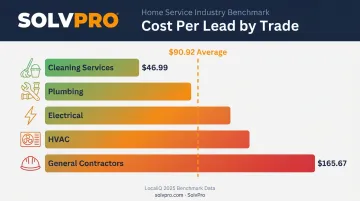
Home services search-ad costs vary widely by trade. LocaliQ's 2025 benchmark data puts the overall home-services cost per lead at $90.92, ranging from $46.99 for cleaning services up to $165.67 for general contractors. If a channel is producing leads at that cost but zero booked jobs, that's money better spent elsewhere.
KPIs to watch:
- Cost per lead
- Cost per booked job
- Marketing ROI by channel
- Lead-to-customer conversion rate
Businesses running multiple campaigns simultaneously, or scaling ad spend into new service areas, can't afford to guess which channel works. That guesswork gets expensive fast.
Data-Driven Staffing and Office Efficiency
Call analytics reveals timing, volume, and handle-time patterns most small office teams never see without data. Maybe Saturdays spike. Maybe early mornings before crews head out see a rush of calls nobody's ready for.
Once those patterns are visible, owners can schedule office coverage proactively instead of reacting after jobs are already lost to a competitor. Jobber's 2026 survey of over 1,000 home-service owners found that 56% of customers expect a response within an hour, yet only 20% of businesses actually deliver that. That gap is where jobs go missing.
KPIs to watch: average handle time, call abandonment rate, staffing utilization, admin hours spent per booked job.
Call data becomes far more powerful when it's connected to a field service management platform like SolvPro, where scheduling, job records, and CRM lead tracking already live in one place instead of scattered across disconnected tools. Multi-location operations sharing a single dispatch line, and businesses navigating seasonal demand swings, benefit most from that integration.
What Happens When Call Analytics Is Missing or Ignored
Skipping call analytics doesn't mean nothing bad happens. It means the bad stuff happens quietly, week after week, without anyone noticing until revenue looks off at the end of the quarter.
Here's the typical fallout:
- Missed calls go unaddressed. Nobody flags the pattern, so the same coverage gaps keep costing jobs.
- Marketing budgets follow guesswork, not data. Without source tracking, owners allocate spend by gut feeling instead of what actually converts to paid jobs.
- Office staffing stays reactive. Teams burn out during busy stretches and sit idle during lulls, and scheduling errors increase when nobody captures call details properly.
None of this is dramatic on any single day. It adds up.
How to Get the Most Value from Call Analytics
Call analytics only pays off with consistent review, weekly or monthly, not a one-time setup that gets ignored after month one.
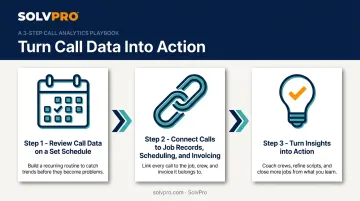
- Review call data on a set schedule. Weekly for high-volume operations, monthly at minimum for smaller teams.
- Connect calls to the rest of the business. Link call-driven leads to job records, scheduling, and invoicing so you can track a lead all the way through to payment.
- Turn insights into action. Adjust staff coverage during peak hours, reallocate ad budget away from underperforming channels, or update call scripts based on what the data shows.
This is where an all-in-one platform earns its keep. SolvPro's CRM and lead pipeline capture incoming leads and move them straight into scheduling once a job is confirmed.
From there, NMI payment processing and QuickBooks Online sync carry that same lead through to invoicing and same-day payment collection, all without re-entering data into five different systems.
Conclusion
The real value of call analytics for field service businesses comes down to visibility, control, and fewer missed opportunities. Fewer missed calls and smarter ad spend won't produce one big win overnight. Over time, they compound into more booked, more profitable jobs.
Treat call analytics as an ongoing practice tied to scheduling, dispatch, and invoicing, the same systems SolvPro brings together in one platform, not a report you glance at once and forget.
Frequently Asked Questions
What are the benefits of call analytics for field service management?
Call analytics reduces missed calls, identifies the most profitable marketing channels, and helps staff the office more efficiently. All three lead directly to more booked jobs and less wasted ad spend.
What metrics should field service businesses track in call analytics?
Focus on missed call rate, call answer speed, call source or campaign attribution, and average handle time. These four numbers reveal most of what's going wrong in a dispatch office.
How does call analytics reduce missed calls for service businesses?
Real-time tracking of call volume and answer patterns exposes exact coverage gaps, like lunch hours or afternoons when everyone's on job sites. Managers then adjust staffing or set up call forwarding before more calls slip through.
Can call analytics integrate with field service management software?
Call data becomes far more valuable once it's tied to scheduling, dispatch, and invoicing. A platform like SolvPro connects the lead pipeline, job scheduling, and payment collection, so a call-driven lead is visible from first contact to final payment.
How much revenue do field service businesses lose from missed calls?
Invoca's research found 27% of calls to home-services businesses go unanswered, and under 3% of those callers leave a voicemail. Each of those calls represents a booking that likely went to a competitor instead.
What's the difference between call tracking and call analytics?
Call tracking attributes calls to marketing sources, like a specific ad campaign or referral. Call analytics is broader, measuring and interpreting all call data, including volume, timing, and outcomes, to improve day-to-day operations.