These aren't rare hiccups. They're daily reality for service businesses running on paper and phone calls. Verbal change orders and misplaced paperwork lead to delayed payments, scope disputes, and hours of admin cleanup every week.
This guide covers what digital contracting actually is, the real benefits behind it, how contractors and field crews use it day-to-day, and what to look for when you make the switch.
KEY TAKEAWAYS
- Digital contracting cuts approval and signing time from days to minutes in many workflows
- Linking signed agreements to invoicing shortens the gap between job approval and getting paid
- Contractors, electricians, plumbers, and cleaning crews all use digital agreements differently
- A platform combining estimating, approvals, and invoicing beats juggling separate e-signature tools
- An agreement stored against the job record is easier to produce during a dispute than one sitting in an email thread
What Is Digital Contracting?
Digital contracting means creating, sending, signing, and storing agreements electronically instead of relying on wet-ink signatures and paper files stuffed in a truck's glovebox. It replaces the entire paper trail, covering everything from drafting to final storage.
That distinction matters. Digital contracting covers the full agreement journey:
- Drafting a scope of work and pricing
- Negotiating terms or milestones
- Getting approval and a signature
- Tracking status and storing the record
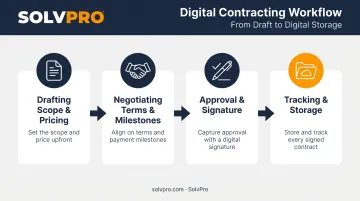
It's a workflow, not a single click.
The Legal Foundation
Electronic signatures aren't a gray area. The ESIGN Act, signed into federal law in 2000, states that a signature or contract can't be denied legal effect solely because it's electronic. 15 U.S. Code § 7001 makes this clear at the federal level, and most states reinforce it through their own version of the Uniform Electronic Transactions Act.
There's a catch worth knowing: the law doesn't erase the normal requirements of a valid contract. You still need clear terms, mutual consent, and lawful conditions. Going digital doesn't fix a bad agreement. It just removes paper as a barrier to enforcing a good one.
Benefits of Digital Contracting
Faster Turnaround and Better Cash Flow
Paper-based approval cycles drag on for days while documents get mailed, signed, and mailed back. Digital signing collapses that timeline dramatically.
A Forrester study commissioned by Adobe found that average signature-cycle time fell from roughly 7 days to about 2 hours among organizations already using e-signature tools, a 96% reduction. That's a modeled enterprise result, but the underlying mechanic applies at any scale: cutting out mail time and manual routing shrinks approval windows fast.
Faster approvals matter more when they're tied directly to invoicing. Late payments are a real problem for small businesses right now.
A 2025 QuickBooks small business survey found that 56% of businesses had unpaid invoices outstanding, 47% had invoices more than 30 days overdue, and affected businesses were owed an average of $17,500. Connecting a signed agreement straight to an invoice, rather than re-keying job details after the fact, closes that gap.
Fewer Disputes, More Organization, Higher Win Rates
The remaining benefits stack up quickly once you're working digitally:
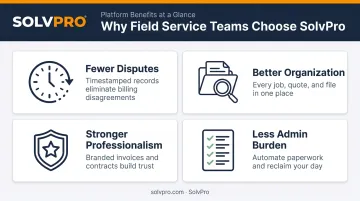
- Fewer disputes: A time-stamped record of scope, pricing, and change orders removes the "he said, she said" arguments that erupt over verbal agreements.
- Better organization: A searchable digital record beats hunting through a job trailer or truck bed for a paper copy nobody can find.
- Stronger professionalism: Polished, branded proposals close more bids than a handwritten estimate on a clipboard, building customer trust before work even starts.
- Less admin burden: Office staff stop printing, mailing, and chasing signatures, freeing hours for higher-value work.
None of this requires enterprise software. It just requires moving the agreement process off paper.
Digital Contracting Use Cases for Service & Field Businesses
Different trades lean on digital contracting in different ways. Here's how it plays out across common field service verticals:
- General Contractors: Digital work orders and subcontractor agreements tied to milestone-based approvals, so payment triggers align with project phases like foundation, framing, or finish work.
- Electrical & Plumbing Businesses: On-site estimate approvals signed from a mobile device before work begins, cutting the delay between diagnosing a problem and starting the fix.
- Landscaping Crews: Recurring seasonal service agreements that can be amended digitally as scope or pricing shifts mid-season, without redrafting the whole contract.
- Commercial Cleaning & Excavation Companies: Multi-site or multi-phase contracts tracked centrally in one system instead of scattered across paperwork for each location.
SolvPro's digital contracts feature supports each of these workflows, from milestone-based approvals to mobile signatures and mid-season amendments, without extra software.
A Note on Smart Contracts
Blockchain-based smart contracts come up often in this conversation, but they're a different animal. According to NIST's blockchain technology overview, a smart contract is executable code deployed on a blockchain that can automatically transfer funds when coded conditions are met.
That's useful for narrow, verifiable triggers, like releasing milestone payments once an external data source confirms a task is done. It's not the same as electronically signing a standard service agreement, and most field service businesses don't need blockchain infrastructure to solve everyday contracting problems.
Best Practices for Implementing Digital Contracting
Switching from paper doesn't happen by accident. These practices make the transition stick:
- Choose a connected platform. Pick a tool that combines estimating, approval, and job workflow rather than a standalone e-signature app that lives outside your other systems.
- Standardize your templates. Build consistent scopes of work, pricing structures, and change order formats so every crew and job type follows the same format.
- Automate renewal reminders. Set alerts 60 days before service agreements expire so recurring revenue doesn't slip through the cracks.
- Make it mobile-friendly. Crews and customers should be able to review and approve agreements from a phone on-site, not just from a desktop back at the office.
- Keep an audit trail. Version history and time-stamped records protect you if a scope or pricing dispute ever comes up.
- Train everyone, not just the office. Field crews need to trust the new workflow as much as admin staff do, or old paper habits creep back in.
How SolvPro Simplifies Digital Contracting for Service Businesses
SolvPro built its Estimates & Digital Contracts feature around this exact problem: crews needing to move from proposal to signed job without leaving the field.
Here's how it fits together:
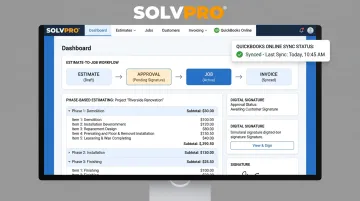
- Phase-based estimating: Break a scope of work into logical stages, like site prep, install, and final walkthrough. Proposals look professional and get signed faster.
- Instant estimate-to-job conversion: Once a customer signs, the approved agreement flows directly into the work order system, no re-entering data, no gaps.
- QuickBooks Online sync: A full, native sync connects approved agreements to invoicing, eliminating manual data transfers between systems.
- Bilingual English/Spanish interface: Office staff and field crews can review and approve agreements in whichever language they're comfortable working in.
SolvPro can be set up in under 10 minutes, with no credit card and no long-term contract required. For crews still relying on paper work orders and verbal change orders, that's a low-risk way to test digital contracting without overhauling everything at once.
Frequently Asked Questions
What Are the Benefits of Digital Contracts?
Digital contracts speed up approvals, reduce disputes through time-stamped records, keep agreements centrally organized, and shorten the gap between job approval and payment. They also cut down on the printing, mailing, and chasing that eats into office time.
What Are the Benefits of Contract Management Software?
Contract management software gives you centralized visibility into every agreement's status, automates renewal and follow-up reminders, and reduces manual errors from re-entering job details. It also supports better compliance through consistent recordkeeping.
What Is a Software Service Contract?
A software service contract, often called a SaaS agreement, outlines the terms for accessing hosted software rather than a locally installed product. It typically covers subscription fees, service levels, data handling, and support terms.
What Is the Best Use Case for Smart Contracts?
Smart contracts work best for objectively verifiable, condition-triggered transactions, like releasing a milestone payment once a data feed confirms a task is complete. They're a blockchain-specific tool, distinct from standard digital service agreements most field businesses use.
Are Digital Contracts Legally Binding for Service Businesses?
Yes. Under the ESIGN Act and most state versions of the Uniform Electronic Transactions Act, electronic agreements carry the same legal weight as paper ones. It still needs clear terms and documented consent from both parties.
How Do I Get Started with Digital Contracting for My Service Business?
Start with your proposals and service agreements using a platform like SolvPro that combines estimating, approval, and invoicing in one workflow. That way you replace paper at the point where delays and disputes usually start.