A customer asks your technician about the repair from eight months ago. The tech wasn't on that job. The crew lead who was is out sick. Now what?
Most conversations about contractor apps focus on scheduling or invoicing. But the feature that actually saves crews in the field every single day is something quieter: instant access to customer history.
This article breaks down why mobile access to job notes, past invoices, and service records matters in practice, beyond a line on a features list. It changes how fast and how well work gets done in the field.
KEY TAKEAWAYS
- Field crews can review past jobs and invoices before knocking on the door
- Service history visibility boosts first-time fix rates, retention, and billing accuracy
- Missing this visibility leads to repeat questions and pricing disputes
- SolvPro keeps office and field teams viewing the same customer record in real time
- History is only useful if it is captured consistently, so notes recorded on site are what make the next visit faster
What Is Mobile Access to Customer History
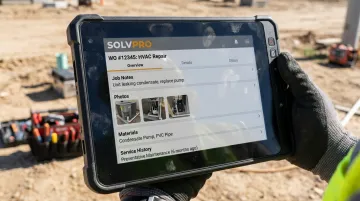
In practical terms, this means a technician can pull out a phone or tablet and see a customer's past jobs, notes, photos, quotes, and payment history before or during a visit.
It shows up in a few specific moments:
- On the drive over, reviewing what happened last time
- Standing on the porch, confirming the service address and equipment details
- Mid-conversation, when a customer references a repair from last spring
That instant context leads to faster decisions and fewer disputes on the job. SolvPro builds it into the daily workflow through digital work orders that store job notes, photos, materials, and history in one place. Crews aren't hunting for a separate app or calling the office to piece it together.
Key Advantages of Mobile Access to Customer History
The advantages below tie directly to metrics contractors already track: how fast jobs get done, whether customers stick around, and how clean the billing process is. None of this is a "nice to have." Each one reflects a real shift in how a crew operates day to day.
Faster, More Informed Service on Every Visit
When a technician can review equipment specs, past repairs, and site notes before arrival, the whole visit changes. Cloud-synced customer profiles pulled up on a phone remove the need to call the office or ask a customer to repeat details they've already given twice.
Why this matters:
- Arriving prepared cuts diagnostic time and skips the repeat-question routine
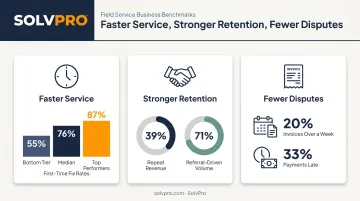
- Prepared crews post far higher first-time fix rates: 76% median, 87% for top performers, versus 55% for the bottom tier, per Aquant's 2024 Field Service Benchmark Report
- A failed first visit isn't a small setback either. The same report found it adds an average of 2.7 total visits and roughly 13 days to resolution
That gap between top and bottom performers isn't random. Crews who know what they're walking into move faster and finish more jobs per day.
KPIs impacted:
- First-time fix rate
- Average job duration
- Technician utilization
When it matters most: Repeat maintenance accounts, multi-visit installs, and jobs involving complex equipment where prior specs actually change the approach.
Stronger Customer Trust and Retention
Customers remember being remembered. When a crew references a specific past repair, a warranty detail, or a stated preference, it signals the business has its act together, even if the person standing on the porch has never met that customer before.
Mobile access makes this possible for any crew member, not just the one who did the original job. The history travels with the work order, not with a person's memory.
Why this matters:
- Personalized service reduces the "starting from zero" feeling that erodes trust with unfamiliar crews
- Repeat customers drive 39% of annual revenue, and referrals drive 71% of business volume, per a ServiceTitan-commissioned survey of 1,000+ U.S. contractors
- Consistent service protects that referral engine instead of eroding it over time
KPIs impacted:
- Customer retention rate
- Referral rate
- Online review scores
When it matters most: Businesses running on recurring revenue, think commercial cleaning agreements, landscaping contracts, or plumbing service plans, where the same customer sees a different crew every few months.
Fewer Errors, Rework, and Billing Disputes
Nothing burns margin faster than redoing work because nobody could see what was agreed to last time. Mobile access lets crews and office staff check exact past invoices, materials used, and agreed pricing before a wrench even comes out.
Why this matters:
- Visible historical records prevent mismatched parts, incorrect pricing, and repeated mistakes
- 20% of commercial contractors take over a week to invoice, and 33% see payments arrive over a week late, per ServiceTitan's commercial contractor survey
- Faster, more accurate invoicing shortens that entire cycle
SolvPro's digital work orders store material tracking, change orders, and complete job history in one record. That means the crew starting a repeat job can see exactly what was billed and used last time, instead of guessing or calling the office mid-job.
KPIs impacted:
- Rework rate
- Invoice accuracy
- Dispute rate
- Days-to-payment
When it matters most: Multi-crew operations, warranty-covered work, and any business juggling dozens of active accounts where "what did we agree to" comes up constantly.
What Happens When Customer History Isn't Accessible in the Field
Without mobile access, contractors fall back on paperwork, spreadsheets, or office callbacks. The consequences show up fast:
- Crews arrive blind and re-ask customers for information already on file, which reads as disorganized
- Jobs stall while someone waits on the office to fax, email, or read out old records over the phone
- Service quality swings depending on which crew member handled the last visit
- Billing disputes flare up when pricing or scope doesn't match what was previously agreed
- Upsell and renewal opportunities get missed because nobody's looking at the history in the moment it matters
Every one of these traces back to the same visibility gap: the information usually exists somewhere, but it isn't in the crew's hands when they need it.
How to Get the Most Value from Mobile Customer History Access
Mobile access only pays off when the data behind it is accurate. That means consistent entry, every job, every time. A record with gaps is almost as bad as no record at all.
Three habits make the difference:
- Enter data consistently. Notes, photos, and materials logged inconsistently create blind spots that show up at the worst moment, usually mid-job in front of a customer.
- Build the habit of checking history before every visit, not just when a customer brings something up. Proactive review prevents the awkward moment of learning something on the porch.
- Choose a platform with searchable, centralized profiles. SolvPro syncs job history and notes between office and field automatically, removing the extra step that causes teams to skip this altogether.
The friction usually comes from habit, not technology. A platform that makes lookup effortless turns "we should check that" into something crews actually do.
Conclusion
Mobile access to customer history comes down to keeping records accurate, visible, and consistent for every crew on every visit. The advantages compound. Faster service, stronger customer retention, and fewer disputes all build on that same foundation of accurate, accessible records.
This isn't a one-time setup task. Contractors get the most value when history gets captured and reviewed on every job, continuously, so the record only gets more useful over time. SolvPro's mobile app keeps that history accurate and accessible for every crew, every time.
Frequently Asked Questions
What Counts as "Customer History" for a Contractor's Mobile App?
It typically includes past job notes, service dates, equipment details, photos, quotes, and invoices, tied to a single customer profile. SolvPro stores this within digital work orders, covering notes, materials, change orders, and job history in one place.
Can Office Staff and Field Crews See the Same Customer Records at the Same Time?
Yes, on cloud-based platforms. Updates made in the field, like a new photo or status change, appear on the office side instantly. Scheduling or notes pushed from the office reach the crew's device just as fast.
Do Mobile Apps for Customer History Work at Job Sites with Poor Signal?
Many field service apps cache recent records locally and sync automatically once a connection returns. This keeps crews working even in dead zones without losing updates.
How Does Access to Customer History Affect Getting Paid Faster?
Accurate historical pricing and scope reduce disputes over what was agreed to, which speeds up invoice approval. Faster approval means less time spent chasing payment.
Is Customer Data Secure When Accessed Through a Mobile App?
Reputable platforms rely on encrypted cloud storage, secure login requirements, and permission-based access. SolvPro, for example, uses crew-level permissions so office staff and field crews only see what's relevant to their role.
What Size Contracting Businesses Benefit Most from This Kind of Mobile Access?
Any multi-crew or repeat-customer business benefits, but the impact grows with scale. More crews and more recurring accounts mean more chances for information to get lost without a shared record.