That disconnect costs real money. Active users of AI-powered field service tools recovered an average of 3.2 hours per week, or more than 160 hours per year, according to a 2025 Housecall Pro survey of 400+ U.S. service professionals. That's admin time previously lost to quoting, scheduling, and chasing invoices.
An all-in-one automation platform fixes this by putting scheduling, work orders, crew tracking, and payments under one roof. This guide breaks down the top options for 2026 so you can pick the right fit for your crew size and budget.
TL;DR
An all-in-one business automation platform for service providers combines scheduling, work orders, crew tracking, invoicing, and payments into a single system. It replaces the patchwork of spreadsheets and disconnected apps most crews rely on.
Why it matters:
- Fewer missed or double-booked jobs
- Faster invoicing and quicker payment collection
- Less time spent on manual admin work each week
How to choose: Prioritize ease of use, industry-specific fit, native accounting/payment integrations, and transparent pricing over brand recognition.
Top platforms covered: SolvPro, Jobber, Housecall Pro, ServiceTitan, and Zoho One.
Overview of Business Automation Platforms in the Service Industry
Field service automation software isn't the same as generic office or marketing automation. It's built for crews who work at job sites, not desks, meaning it needs mobile access, GPS tracking, and job-based billing baked in from the start.
Generic tools like Zapier or HubSpot can connect apps together, but they weren't designed for dispatching a plumber at 7 a.m. or tracking material costs on a landscaping job.
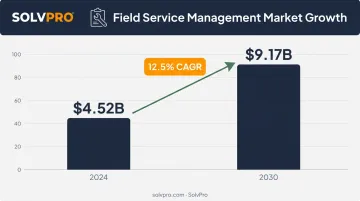
That gap is exactly why the market for purpose-built tools is expanding so quickly. The global field service management market is projected to grow from $4.52 billion in 2024 to $9.17 billion by 2030, a 12.5% compound annual growth rate, according to MarketsandMarkets' industry analysis. Small and midsize businesses are driving much of that growth as they move away from spreadsheets and pen-and-paper tracking.
The platforms below represent the top all-in-one options built specifically for service providers who manage crews in the field, not just office staff behind a desk.
Top All-in-One Business Automation Platforms for Service Providers in 2026
We evaluated each platform on five factors: industry-specific functionality, ease of onboarding for non-technical field staff, native accounting and payment integrations, pricing transparency, and the ability to scale as crews grow.
SolvPro
SolvPro was built by a team with 50+ years of combined experience in construction, field service, estimating, and project management. The goal was straightforward: unify scheduling, work orders, crew tracking, and payments so office staff and field crews stop working from five different systems.
What sets it apart:
- Fully bilingual English/Spanish interface across the web platform and mobile app, including customer communications
- Event-based geolocation tracking that geo-stamps time entries, photo uploads, and field updates for verifiable crew accountability
- Phase-based estimating with customer-facing PDF proposals, milestone payment schedules, and digital signatures
- Native QuickBooks Online sync and NMI payment processing built into the core platform, not bolted on as a paid add-on
- No long-term contracts, with setup completed in under 10 minutes
| Category | Details |
|---|---|
| Pricing | Starter: $179/mo (up to 3 users). Growth: $228/mo (4 users, +$49/user after). Scale: custom pricing, unlimited users. No add-on fees for core tools. |
| Key Features | Scheduling, work orders, crew geolocation tracking, phase-based estimating, invoicing, QuickBooks Online sync, NMI payment processing |
| Best For | Growing multi-crew service businesses, including general contractors, electrical, plumbing, landscaping, excavation, and commercial cleaning teams |
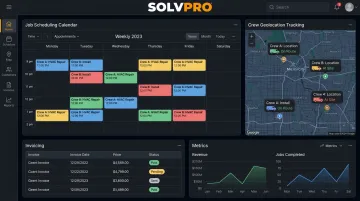
The setup process is fast: create an account in under two minutes, import your crew and jobs, then dispatch your first work order. A live team walks new users through onboarding rather than handing them a manual, and a free Demo & Discovery Consultation is available for teams who want a guided walkthrough first.
Jobber
Founded in 2011 after its creators watched a painting contractor drown in paperwork, Jobber now serves over 400,000 service professionals across 60+ countries.
Jobber's strengths are its polished mobile app and Client Hub, where customers can approve quotes, view appointment details, and pay invoices online. It also includes lightweight CRM functionality through its Client Manager.
| Category | Details |
|---|---|
| Pricing | Core: $29/mo. Connect: $99/mo. Grow: $149/mo. Plus: $399/mo (5 users). Extra users +$29/mo each; Marketing Suite +$79/mo; AI Receptionist +$29/mo. |
| Key Features | Scheduling, quoting, batch invoicing, automated follow-ups, Client Hub |
| Best For | Solo operators and small teams in home services |
Housecall Pro
Housecall Pro, launched in 2013, focuses on residential home service businesses like plumbing, HVAC, and cleaning companies, positioning itself as a financial and operations platform rolled into one.
Its differentiator is baked-in marketing: automated review requests, postcard campaigns, and Mailchimp syncing come standard, alongside online booking with real-time availability.
| Category | Details |
|---|---|
| Pricing | Basic: $59/mo. Essentials: $149/mo (up to 5 users). Max: $299/mo (8 users, +$35/user after). Card processing from 2.59%; ACH at 1%. |
| Key Features | Online booking, dispatching, GPS tracking, payment processing, marketing automation |
| Best For | Residential service businesses wanting marketing and operations bundled together |
ServiceTitan
ServiceTitan calls itself an operating system for the trades. Founders Ara Mahdessian and Vahe Kuzoyan built the platform after watching their contractor fathers struggle with outdated tools.
It's an enterprise-grade platform with deep reporting, technician scorecards, dynamic call tracking, and customer financing workflows, but that power comes with a steeper learning curve.
| Category | Details |
|---|---|
| Pricing | Quote-based, priced per technician. No public dollar figures published. |
| Key Features | Drag-and-drop dispatch, machine-learning technician matching, revenue reporting, call tracking, financing integrations |
| Best For | Larger trades companies with dedicated office staff and higher software budgets |
Zoho One
Zoho One is a business operating system spanning 50+ apps covering CRM, finance, HR, and project management, rather than a purpose-built field service tool. It launched in 2017.
The appeal is breadth at a low per-user cost. The tradeoff is significant setup time, since none of the apps are configured for job-based billing or crew dispatch out of the box.
| Category | Details |
|---|---|
| Pricing | Flexible Users: $90-$105/user/mo. All Employees: $37-$45/employee/mo (every payroll employee must be licensed). |
| Key Features | CRM, Books/Invoice/Expense, People/Recruit, Projects/Sprints |
| Best For | Service businesses wanting a broad, low-cost suite they're willing to customize for field operations |
How We Chose the Best Platforms
A common mistake is picking a generic automation tool, like Zapier or a marketing CRM, instead of software purpose-built for field crews and job-based billing. We screened out any platform that couldn't natively handle the full job-to-cash workflow.
Our criteria, and why each one matters:
- Industry-specific functionality covers scheduling, crew tracking, and job costing — tied directly to fewer missed jobs and accurate profitability data
- Ease of onboarding determines how fast non-technical field staff actually start using the tool
- Native accounting and payment integrations: the difference between invoices going out same-day versus weeks late
- Pricing transparency means no surprise add-ons that inflate your monthly bill
- Scalability ensures the platform grows with you as you add crews and jobs
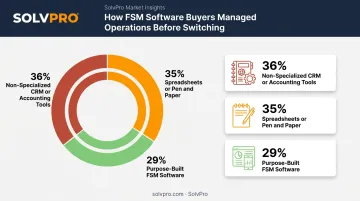
This distinction matters because buyer behavior backs it up. Among prospective FSM software buyers, nearly 36% were relying on non-specialized CRM or accounting tools, while 35% still used spreadsheets or pen and paper, according to Software Advice's Buyer Insights Report. Purpose-built software closes that gap.
Conclusion
The right automation partner matches how your crews actually operate on job sites, not just what a sales deck promises. Brand recognition matters far less than day-to-day fit.
Before committing, evaluate ongoing performance, scalability, and total cost, including add-ons and per-user fees that can increase your bill without warning.
If you're a growing multi-crew business that needs bilingual support, built-in payments, and no long-term contract, SolvPro can be set up and running the same day. Setup takes under 10 minutes, live onboarding support is included, and you can cancel anytime.
Frequently Asked Questions
What is the best all-in-one business automation platform for service providers in 2026?
The best fit depends on your crew size and specific needs. SolvPro stands out for growing multi-crew businesses that need bilingual support, built-in payments, and transparent pricing without long-term contracts.
What is the best all-in-one marketing platform for service providers?
Housecall Pro offers the strongest built-in marketing and online booking tools among operations platforms. That said, most service providers get more value from an operations-first platform paired with simple marketing add-ons.
What is the best CRM for service-based businesses?
Dedicated field service platforms typically include lightweight CRM functionality, like lead pipelines and activity timelines, suited to job-based businesses. Traditional sales CRMs like Salesforce are usually overkill for crew-based operations.
How much does business automation software cost for a small service business?
SMB-focused platforms typically range from $29 to $400 per month depending on user count and features, while enterprise tools like ServiceTitan require custom quotes. Watch for per-user fees and paid add-ons that push costs higher.
What features should I look for in a field service management platform?
Look for real-time scheduling and dispatch, mobile-friendly crew tracking, digital invoicing, and native payment processing. These core features separate purpose-built FSM software from generic business tools.
Can these platforms integrate with QuickBooks and accept online payments?
Yes. Leading platforms, including SolvPro, offer native QuickBooks Online sync and built-in payment processing, so invoices and job costs flow directly into your accounting without manual re-entry.