GPS trackers used to mean a blinking dot on a map. Not anymore. Today's systems pull engine hours, fault codes, geofence alerts, and utilization data, turning equipment visibility into a competitive edge rather than a nice-to-have.
This guide breaks down the seven best GPS trackers for construction equipment in 2026, how to pick between them, and where equipment tracking fits into your broader operation.
Key Takeaways
- Hardwired trackers suit powered equipment; battery-powered units suit trailers — most fleets need both.
- GPS tracking can push same-state recovery odds to 97% for stolen equipment.
- The right pick depends on your fleet mix, contract terms, and telematics needs.
- Equipment tracking shows "where's my machine," not crew scheduling or job costing.
Why Construction Companies Rely on GPS Equipment Tracking
GPS equipment tracking means monitoring where your machines are, and increasingly, how they're being used. It's shifted from passive location pins to real-time telematics streams covering engine diagnostics, idle time, and fault codes.
That shift reflects real market momentum. The global construction equipment tracking market was valued at $1.7 billion in 2023 and is projected to hit $3.9 billion by 2032, growing at a compound annual growth rate (CAGR) above 9.8%, according to Global Market Insights.
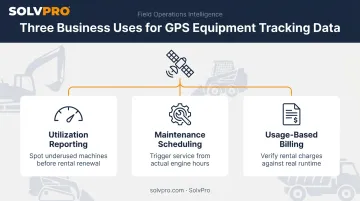
Contractors aren't just buying trackers to stop theft. They're using the data for:
- Utilization reporting: spotting underused machines before renewing a rental
- Maintenance scheduling: triggering service based on actual engine hours, not guesswork
- Usage-based billing: verifying rental equipment charges against real runtime
When we evaluated providers for this list, we weighed hardware flexibility (powered vs. unpowered options), telematics depth, pricing transparency, and how restrictive the contract terms are.
The 7 Best GPS Trackers for Construction Equipment in 2026
This list spans platforms built for mixed fleets, enterprise operations, remote sites, and budget-conscious small contractors. Each entry covers who it fits, contract structure, and the one feature that sets it apart.
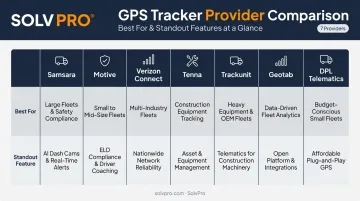
Samsara
Samsara built its name in vehicle telematics and compliance tooling, then expanded into equipment tracking with the Unpowered Asset Gateway (AG51) and Powered Asset Gateway (AG53). It's a strong fit if you already run a heavy over-the-road fleet alongside your equipment, since dashcams, driver scoring, and asset tracking live under one roof.
The catch: equipment-specific hardware options are thinner than what dedicated construction platforms offer, and pricing tends to require a multi-year commitment paid upfront.
| Category | Details |
|---|---|
| Best For | Large fleets needing combined vehicle and equipment oversight |
| Contract Terms | Typically multi-year, auto-renewing unless canceled 30 days prior — verify current terms with sales |
| Standout Feature | AI-powered dashcams and driver safety scoring |
Motive
Motive started as a trucking-safety platform and has grown into what it calls "integrated operations" software, combining GPS, dashcams, and asset gateways. Its Asset Gateway Mini works in either cable or battery mode, with 5+ years of battery life when unplugged, making it useful for trailers and generators alike.
Motive also offers OEM integrations with major equipment brands and an AI-driven safety review team that flags risky driving behavior automatically.
| Category | Details |
|---|---|
| Best For | Fleets prioritizing driver safety alongside equipment visibility |
| Contract Terms | Monthly options exist, but auto-renews for 12-month or 1-month periods; early termination fees apply |
| Standout Feature | Long-life battery asset trackers plus dedicated AI safety review team |
Verizon Connect
Verizon Connect's biggest edge is coverage. Running on Verizon's cellular network, it holds a signal in rural or dispersed job sites where other providers drop out. Its Equipment Asset Tracker (EAT) and battery version (EAT-B) are both IP67-rated, with the battery unit rated for up to 13 years of location updates.
Sensor data covering temperature, vibration, and door movement makes it a solid choice for specialty trailers, though its hardware lineup for heavy machinery is limited compared to construction-first platforms.
| Category | Details |
|---|---|
| Best For | Companies wanting dependable network coverage in low-signal areas |
| Contract Terms | Typically multi-year; billing starts at install or 90 days after signing |
| Standout Feature | Dedicated support contact per account |
Tenna
Tenna was built specifically for construction, and it shows in the hardware range: GPS units, Bluetooth beacons, and QR tags that let you tier tracking by asset value. A $200 generator doesn't need the same tracker as a $150,000 excavator, and Tenna's pricing tiers reflect that logic.
Its maintenance scheduling ties directly to usage data pulled from TennaCANbus and OEM integrations, which appeals to companies juggling large, mixed-asset inventories.
| Category | Details |
|---|---|
| Best For | Larger construction operations wanting integrated maintenance and asset management |
| Contract Terms | Custom pricing, auto-renews for terms matching the initial agreement |
| Standout Feature | Broad low-cost hardware tiers spanning small tools to heavy machinery |
Trackunit
Trackunit specializes in CAN bus telematics, pulling engine fault codes and machine health data straight from OEM equipment. With integrations across 100+ equipment brands, including Caterpillar, John Deere, and Komatsu, it's built for enterprise fleets that need diagnostic depth.
Smaller teams sometimes find the alert volume overwhelming without a dedicated fleet manager to triage the data.
| Category | Details |
|---|---|
| Best For | Enterprise fleets needing deep OEM diagnostic data |
| Contract Terms | Custom/enterprise pricing; cancellation requires email confirmation |
| Standout Feature | CAN bus-level machine health telematics |
Geotab
Geotab is one of the largest telematics providers globally, known mostly for its integration marketplace, which connects to hundreds of third-party apps. Its GO Anywhere devices are IP68/IP69K rated with up to 10 years of battery life.
Geotab is vehicle-focused first. There's no dedicated heavy equipment hardware line, and every purchase runs through an authorized reseller rather than direct sales.
| Category | Details |
|---|---|
| Best For | Vehicle-heavy fleets (dump trucks, mixers) needing deep data analytics |
| Contract Terms | Sold exclusively through authorized resellers |
| Standout Feature | Extensive third-party integration marketplace |
DPL Telematics
DPL has spent 20+ years building rugged trackers for harsh industrial environments. Its AssetView line reflects that experience: IP68-rated, battery-powered units use adaptive GPS-accelerometer tracking that extends battery life by reporting less often when equipment is stationary.
The pay-as-you-go model, with no long-term contract and non-proprietary batteries, makes DPL a standout for cost-conscious contractors tracking unpowered assets in remote conditions.
| Category | Details |
|---|---|
| Best For | Rugged, remote deployments and unpowered asset tracking |
| Contract Terms | Pay-as-you-go, no penalty for deactivation |
| Standout Feature | Adaptive GPS-accelerometer tracking with long battery life |
How to Choose the Right GPS Tracker for Your Equipment
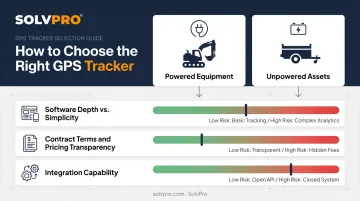
Start with the powered vs. unpowered split. Hardwired trackers draw power from the machine and log engine hours, so they're right for excavators, loaders, and skid steers. Battery-powered units go on trailers, generators, and compressors that never turn an ignition key. Most fleets end up buying both.
From there, weigh a few practical trade-offs:
- Software depth vs. simplicity: Enterprise platforms bundle compliance tools and driver safety features you may never touch. If you only need location and engine hours, you could be paying for a lot of unused capability.
- Contract terms and pricing transparency: Several providers on this list gate pricing behind a sales call and lock you into multi-year agreements. Ask for the cancellation policy in writing before signing anything.
- Integration capability: As your fleet grows past a handful of assets, API access to your ERP or rental software stops being optional.
Common mistakes to avoid:
- Picking a tracker on price alone without checking hardware ruggedness (look for IP67 or IP68 ratings)
- Ignoring install and ongoing maintenance overhead, especially for hardwired units
- Assuming one platform can handle both equipment tracking and crew management
GPS Equipment Tracking vs. Crew and Job Tracking: Closing the Loop
A GPS tracker tells you where your excavator sat overnight. It won't tell you who was on site today, what job they worked, or whether that day's labor got billed correctly. That's a different problem, and it needs a different tool.
This is where platforms like SolvPro fill the gap. Instead of continuous GPS pings, SolvPro uses event-based geolocation, attaching location and time stamps to specific actions: clock-ins, clock-outs, photo uploads, and job status updates. Every time entry becomes a verifiable record of when and where work actually happened.
SolvPro's real value shows up in the areas equipment trackers never touch:
- Drag-and-drop scheduling across multiple crews and job sites, with built-in double-booking prevention
- Job costing analytics that tie labor and material costs directly to what each job earned
- Same-day invoicing, with NMI payment processing built into every pricing tier, not sold as an add-on
For contractors running excavation, general contracting, or landscaping crews across scattered job sites, pairing a dedicated GPS tracker for the machines with a field service platform for the people is the more realistic setup.
SolvPro doesn't ingest telematics feeds from equipment trackers directly. It covers the operational layer those platforms were never built to handle: crew accountability, scheduling, and getting paid.
Conclusion
There's no single "best" GPS tracker for every contractor. The right pick depends on your fleet mix, your budget, and whether you need deep telematics or straightforward location data. Before signing anything, check contract flexibility, hardware ruggedness ratings, and setup and integration support. Sticker price rarely tells the whole story.
And once your equipment is covered, don't stop there. Pairing a dedicated tracker with a platform like SolvPro gives growing contractors the full picture: machines, crews, schedules, and profitability, without piling on enterprise-level complexity.
Frequently Asked Questions
What is the best real-time GPS tracking system for contractors?
It depends on your fleet type. Hardwired trackers suit powered equipment, while battery units work better for trailers and unpowered assets. Tenna and Trackunit both offer strong real-time updates and reliable geofencing for construction-specific fleets.
What is the best way for contractors to track time?
Time tracking is separate from equipment GPS tracking. Most contractors use crew clock-in apps or field service platforms with geolocation-verified punches, such as SolvPro's event-based tracking, which stamps every clock-in with location data.
How much does GPS tracking for construction equipment typically cost?
Battery-powered units often run $15 to $30 per asset monthly, while hardwired systems with deeper telematics can run higher. Pricing transparency varies widely, and many providers require a sales call to get a quote.
Can GPS trackers help prevent construction equipment theft?
Yes. Geofencing and after-hours movement alerts are the primary deterrents, and GPS tracking drives same-state recovery rates as high as 97% once a machine goes missing.
Do I need different trackers for powered and unpowered equipment?
Yes, in most cases. Hardwired trackers draw power from the machine and capture engine hours, while unpowered assets like trailers and generators need battery-powered units rated for long-term outdoor durability.
Is GPS equipment tracking enough to manage a construction crew?
No. Equipment tracking doesn't cover scheduling, job costing, or crew accountability. Pairing it with a field service platform like SolvPro closes that operational gap.